Tap to View
𝗖𝗢𝗟𝗟𝗘𝗚𝗘 𝗡𝗘𝗪𝗦 | Academic Council formalizes Recognition of Academic Honorees, advances Flexible Learning Continuity Plan
Date Posted: Sep. 16, 2026
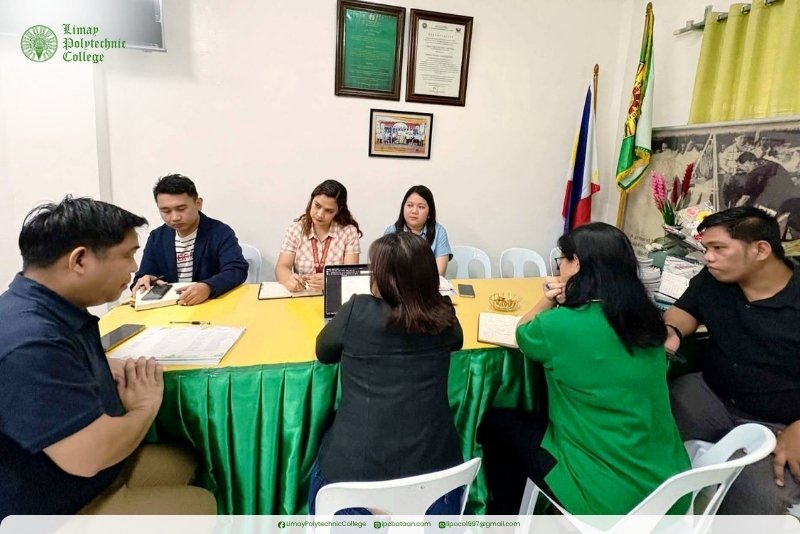
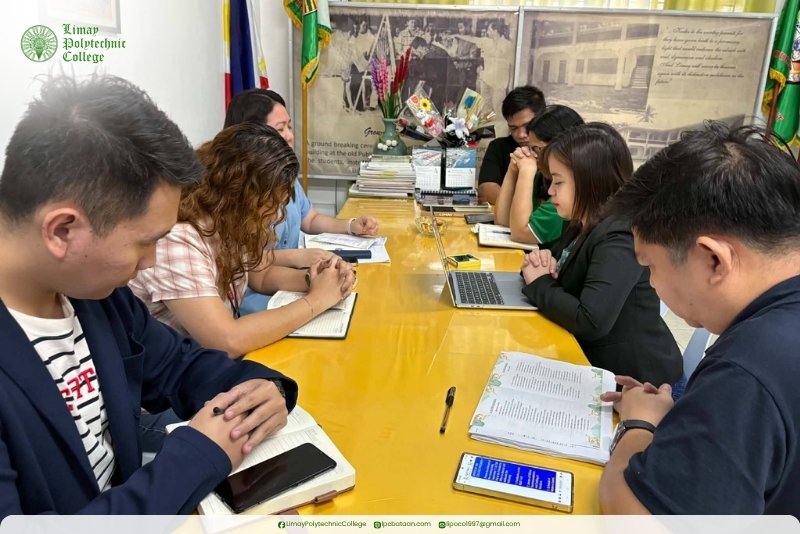
The Academic Council of Limay Polytechnic College convened on September 11, 2026 to deliberate on academic and student-related matters and formulate resolutions in support of institutional policies, academic standards, and learning continuity.
The Council approved the recognition of 126 Dean’s Listers and 19 Director’s Listers from the previous semester. The list of academic honorees, presented by College Registrar Ms. Marites Pacquing, had been validated by the respective department heads prior to its submission to the Council for confirmation and approval.
The approval formally paved the way for the 10th Student Honors Convocation and 4th Pagtatalaga, carrying the theme “Empowering Future Leaders, Upholding the Commitment to Serve.”
The activity recognizes students who have demonstrated academic excellence while emphasizing that achievement is complemented by leadership, responsibility, and commitment to service.
Strengthening Flexible Learning During Emergencies
Another significant matter discussed was the proposed institutional policy to strengthen and expand learning continuity through flexible learning modalities during emergencies.
The proposal was prompted by the College’s experience during nearly a month of onsite class suspension brought about by heavy rains, typhoons and flooding. The situation provided an opportunity for the Academic Council to examine the effectiveness, challenges, and emerging practices associated with the shift from onsite instruction to flexible learning.
To provide an evidence-based foundation for the proposed policy, the College prepared and distributed a faculty survey and data-gathering instrument to determine the status of the transition to flexible learning modalities, including experiences and operational concerns encountered during the period of class suspension.
A corresponding study on learning continuity and flexible learning during emergencies is also being undertaken. The results are expected to serve as inputs in the formulation of an institutional framework and policy for flexible learning during emergency situations, with the aim of ensuring that instruction remains accessible, organized, and responsive even when regular onsite classes cannot be conducted.
The initiative reinforces LPC’s commitment to learning continuity, institutional resilience, and quality assurance, particularly in responding to disruptions that may affect the delivery of instruction.
Activities Rescheduled for Orderly Implementation
The Council also deliberated on the rescheduling of institutional activities affected by the suspension of classes and work pursuant to the directive from Malacañang.
The revised schedules were developed based on the availability of venues, resource speakers, participating offices, and other logistical considerations.
The Office of Student Affairs, Discipline and Services (OSADS) presented the proposed rearranged schedules, including corresponding justifications related to adjustment in the program flow, crowd management, committee assignments, venue availability, and guest participation.
After deliberation, the Academic Council approved the revised schedules and merging of relevant activities to suit availability.
The meeting was chaired by College President Dr. Elmer De Leon, with Ms. April Cruz, Director of Academic Affairs, serving as co-chair.
Council members included Dr. John Levy Rueda, Head of Business and Accountancy; Ms. Cheyser Charrese Gatchula, Head of Information Technology Education; Ms. Julie Diaz, President of the Faculty and Staff Club, representing the faculty and staff; and Ms. Jesica Marata, Officer of Student Affairs, Discipline and Services, representing the students and serving as a resource member during the meeting. Mr. Joemark Ablian, Director of Research, Innovation and Extension, served as Council Secretary.
Through its continuing deliberations and policy-making functions, the Academic Council serves as a key mechanism for collegial governance, academic quality assurance, evidence-based decision-making, and institutional responsiveness.
Its latest resolutions demonstrate LPC’s continuing effort to balance academic excellence, with student potential enrichment, activity engagement, student recognition, learning continuity, and operational preparedness in times of disruption. #
#SDG4QualityEducation