Tap to View
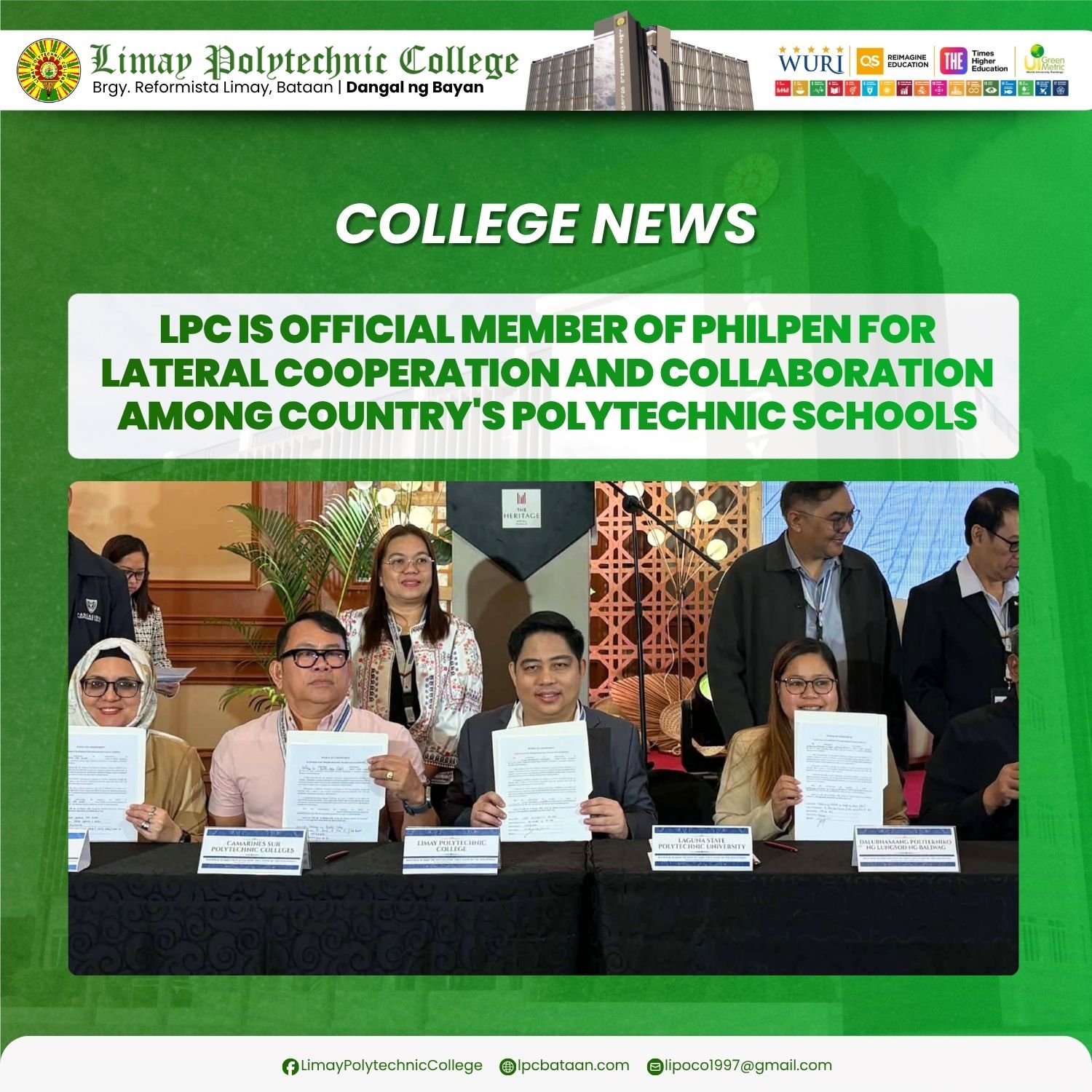
𝗖𝗢𝗟𝗟𝗘𝗚𝗘 𝗡𝗘𝗪𝗦 | LPC is Official Member of PhilPEN for Lateral Cooperation and Collaboration among Country's Polytechnic Schools
Date Posted: Oct. 16, 2026
Limay Polytechnic College (LPC) has officially joined the Philippine Polytechnic Education Network (PhilPEN), an initiative led by the Polytechnic University of the Philippines (PUP) to strengthen cross border collaboration among polytechnic higher education institutions and advance a more responsive, competency-based, industry-oriented, and future-ready polytechnic education system in the country.
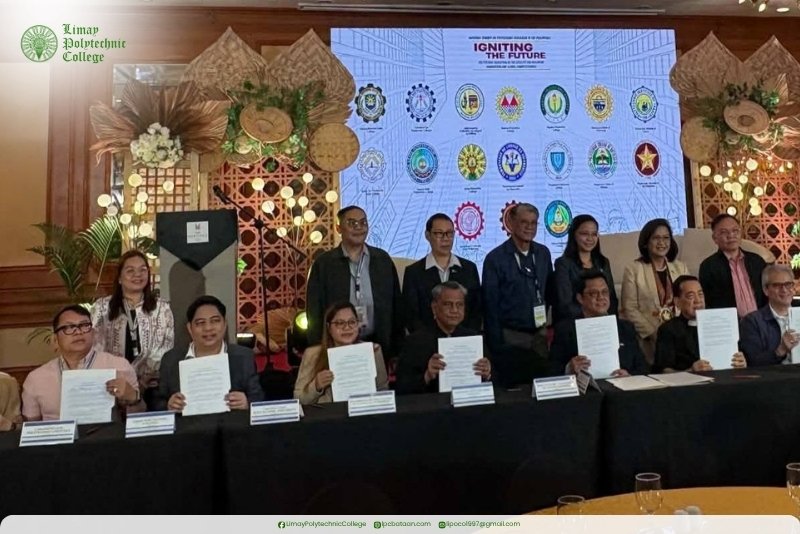
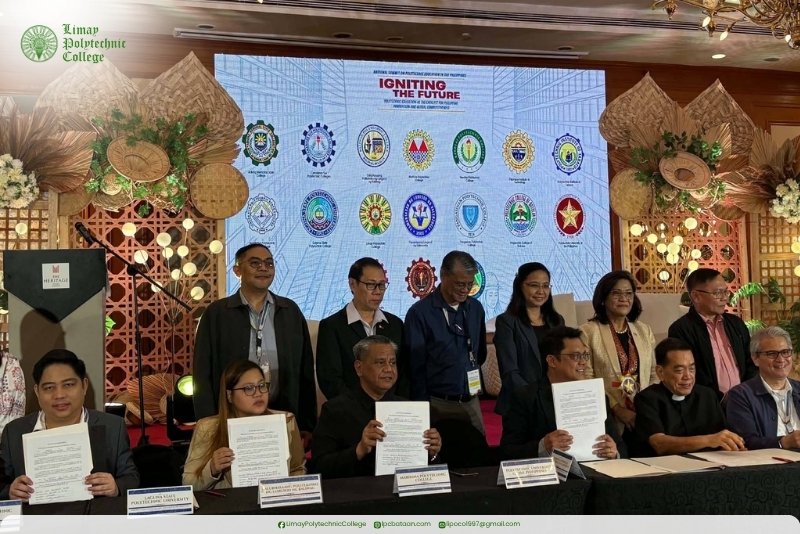
LPC’s membership was formalized through a commitment-signing ceremony among presidents of member institutions on October 15, 2026, held as a highlight of the three-day National Polytechnic Education Summit at the Heritage Hotel in Pasay City.
The ceremony was witnessed by Hon. Shirley C. Agrupis, Chairperson of the Commission on Higher Education (CHED), supporting and underscoring the significance of the initiative in advancing the development of Philippine higher education.
Seventeen (17) higher education institutions from across the Philippines, spanning Luzon, the Visayas, and Mindanao, comprise the network.
The initiative envisions broader cooperation among polytechnic-oriented institutions, with a future direction toward ASEAN-level engagement, regional recognition, and internationalization.
Advancing a Responsive and Future-Ready Polytechnic Education Framework
A key feature is the presentation of a proposed polytechnic education framework designed to guide discussions on the direction, character, and development of polytechnic education in the country.
The network responds to the growing need for higher education institutions to move beyond fragmented and overly rigid academic structures toward more integrated, outcomes-based, and competency-driven learning systems.
Its envisioned approach places greater emphasis on industry relevance, practical application, professional preparation, technical competencies, and the humanities as complementary dimensions of holistic education in multiple pathways flexibly and collaboratively interferred and accessed by learners based on their skills, interests, capacities and needs. On the side is the purposive and implicative microcredentialing and credit transfer that the present time demands.
This paradigm seeks to strengthen the connection between academic learning and real-world demands while allowing institutions to respond more effectively to evolving workforce requirements, technological advancements, community needs, and global developments.
For LPC, joining the network reflects its institutional commitment to developing an educational framework that harmonizes academic excellence, professional competence, technical proficiency, social responsibility, and future readiness.
Its inclusion provides an opportunity to contribute to collaborative policy discussions, exchange institutional best practices, explore academic and industry partnerships, and participate in the continuing development of a distinct and responsive polytechnic education model.
Strengthening Collaboration, Research, and Extension Partnerships
The establishment of the National Polytechnic Education Network also opens opportunities for participating institutions to strengthen inter-institutional cooperation in instruction, research, innovation, extension, and industry engagement.
LPC recognizes the importance of collaborative initiatives that connect higher education with the needs of local communities and the demands of an increasingly interconnected world.
Through this network, the College can further explore opportunities for knowledge sharing, capability development, institutional benchmarking, and partnerships that support continuous quality improvement.
The College likewise acknowledges its existing partnership with PUP through an extension program focused on environmental care in both upland and coastal communities.
This collaboration demonstrates the shared commitment of the two institutions to extending the benefits of higher education beyond campus boundaries and contributing to environmental sustainability and community development.
Such engagement complements LPC’s institutional priorities in research, innovation, extension, and internationalization, reinforcing the principle that higher education must be both globally responsive and locally relevant.
LPC's Commitment to Transformative Higher Education
Through the leadership of College President Dr. Elmer B. De Leon, LPC continues to pursue strategic partnerships and institutional initiatives that strengthen academic quality, expand opportunities for collaboration, and advance its vision of producing competent, ethical, innovative, and future-ready graduates.
Membership in the National Polytechnic Education Network marks another meaningful step in the College’s continuing institutional development.
It provides a platform for LPC to engage with fellow institutions in shaping educational approaches that integrate professional preparation, technical expertise, humanistic perspectives, and practical competencies.
LPC expresses its sincere appreciation to the Polytechnic University of the Philippines for inviting the College to become part of this significant national initiative and for providing opportunities to contribute to the advancement of polytechnic education.
The College likewise, recognizes the importance of CHED’s participation and support in strengthening collaborative efforts toward a more responsive and internationally engaged Philippine higher education sector.
As LPC continues to advance its institutional priorities, its participation in the network reinforces its commitment to continuous quality improvement, meaningful partnerships, and educational innovation.
From local relevance to national collaboration and ASEAN engagement, Limay Polytechnic College continues to strengthen its institutional foundations and expand its horizons toward a more integrated, industry-responsive, and future-ready system of higher education. #
#SDG4QualityEducation
#SDG17PartnershipsForTheGoals